
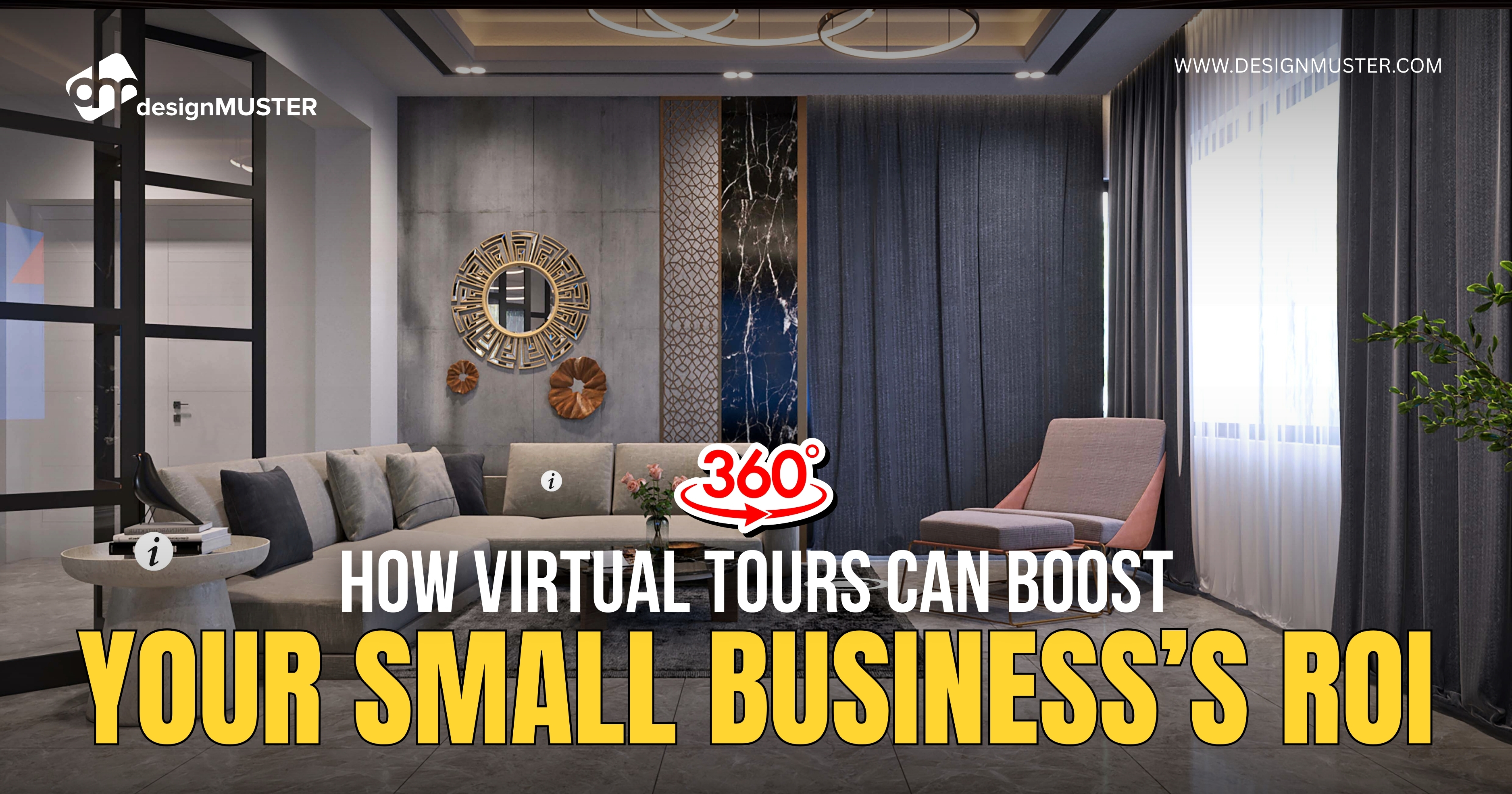
For small business owners, every marketing decision comes down to one critical question: “Will this investment actually pay off?” In today’s fast-paced digital marketplace, traditional advertising methods like flyers, posters, and newspaper ads are no longer enough. Customers now expect transparency, convenience, and engaging experiences before they even step foot inside your business.
This is where 360 virtual tours come into play. More than just a visual showcase, they are powerful sales and marketing tools that help build trust, increase customer engagement, and drive higher returns on investment (ROI).
Whether you run a café, retail store, salon, gym, or real estate business, virtual tours allow potential customers to explore your space online—anytime, anywhere. And the result? More visits, more bookings, and ultimately, more revenue.
In this blog, we’ll explore in detail how virtual tours can boost your small business’s ROI, what benefits they offer, real-world use cases, and why they are one of the smartest investments you can make today.
What Exactly is a Virtual Tour?
A virtual tour is an immersive, 360-degree simulation of your business environment created using panoramic photography and advanced software. Unlike static images, it allows users to move around your space digitally, giving them the feeling of being physically present.
Features of a Virtual Tour:
- Interactive navigation (walk-through experience).
- Zoom-in capabilities for closer looks.
- Clickable hotspots with added information.
- Integration with Google Maps & websites.
- Mobile-friendly experience for on-the-go customers.
Why Virtual Tours Are a Game-Changer for Small Businesses
1. Boosts Online Visibility and SEO
Search engines prioritize businesses with rich, interactive content. By embedding a virtual tour on your website and Google Business Profile, you increase the chances of appearing higher in local search results.
Fact: Businesses with photos and virtual tours are twice as likely to generate interest compared to those without.
For a small business, improved visibility means more website traffic, more leads, and more opportunities for conversion—without spending extra on paid ads.
2. Increases Customer Engagement
When customers land on your site or Google listing, they often bounce if the content is too static. A virtual tour, however, holds their attention for much longer.
Average engagement time with photos: 10–15 seconds
Average engagement time with a 360 virtual tour: 2–3 minutes
This increased time translates into higher interest, which directly influences buying decisions.
3. Builds Trust and Transparency
Customers want to know exactly what they’re paying for. A virtual tour removes uncertainty by showcasing your business environment openly.
- A restaurant can highlight its dining atmosphere and cleanliness.
- A salon can show the comfort and quality of its space.
- A gym can highlight its facilities and equipment.
This transparency helps customers feel confident in choosing you over competitors.
4. Improves Conversion Rates
Studies show that websites with virtual tours convert at 30–50% higher rates than those with images alone.
For example:
- A real estate agency with 360 tours sells properties 20% faster than those without.
- A retail shop with an online virtual tour sees more in-store visits, as customers already know what to expect.
For small businesses, even a slight bump in conversion can lead to a significant ROI.
5. Long-Term Cost-Effective Marketing
Most advertising campaigns have an expiry date—once the campaign ends, so do the results. A virtual tour, however, is a long-term digital asset.
You invest once, and it continues to generate leads, improve SEO, and boost conversions for years. Compared to monthly ad spend, this makes virtual tours one of the most cost-effective marketing investments for small businesses.
Real-World Applications of Virtual Tours for Small Businesses
Restaurants & Cafés
- Customers can preview the ambiance before booking.
- Drives more table reservations online.
- Encourages food bloggers and influencers to visit.
Real Estate Agencies
- Virtual tours reduce unnecessary site visits.
- Attracts international and remote buyers.
- Faster sales and happier clients.
Retail Stores
- Shoppers explore the store virtually.
- Increases foot traffic from curious online visitors.
- Perfect for seasonal displays or showcasing premium products.
Salons & Gyms
- Allows customers to check facilities, equipment, and hygiene standards.
- Builds credibility and attracts health-conscious clients.
- Differentiates you from competitors with simple photo galleries.
Educational Institutions
- Virtual campus tours attract new students.
- Useful for international admissions.
- Enhances reputation with modern technology adoption.
You Can Also Read : Why Are Top Brands Using 3D Product Visualization in 2025?
ROI Formula: How Virtual Tours Pay for Themselves
ROI (Return on Investment) is calculated as:
ROI = (Profit Gained ÷ Investment Made) × 100
Example for a Small Retail Shop:
- Investment: $600 for a 360 Virtual Tour.
- Result: 15 additional weekly customers (avg spend $30).
- Extra Revenue: $450 per week, or $1,800 per month.
👉 ROI achieved in less than 1 month—and profits continue long after!
This is why virtual tours are not just an expense—they’re a high-return marketing asset.
FAQs:
1. Are virtual tours worth the cost for small businesses?
Yes! Even with a modest investment, most small businesses recover costs within 1–3 months due to increased leads and sales.
2. How long does it take to create a virtual tour?
Small businesses usually get a completed tour within 2–5 business days, depending on size and customization.
3. Can I add my branding or promotional content?
Absolutely. We can customize tours with your logo, colors, hotspots, videos, and promotional offers to maximize marketing impact.
4. Do virtual tours really help with Google ranking?
Yes. Virtual tours improve your Google Maps presence and reduce bounce rates, both of which boost SEO.
5. Do customers actually use virtual tours?
Yes. Research shows 67% of people want more businesses to offer virtual tours before making a decision.
Conclusion
For small businesses, every marketing rupee or dollar must deliver results. A 360 virtual tour is not just a modern trend—it’s a proven strategy to boost online visibility, customer trust, and conversion rates.
Unlike temporary ads, virtual tours are a long-term investment that pays for itself quickly while delivering lasting results. If you want to increase ROI, attract more customers, and stand out from competitors, now is the perfect time to adopt this powerful tool.
Ready to supercharge your small business ROI with a virtual tour?
At Design Muster, we create affordable, high-quality, and SEO-friendly 360 virtual tours tailored to small businesses like yours. Whether you run a café, salon, retail shop, gym, or real estate agency, we’ll help you showcase your space and attract more customers.
👉 [Book Your Virtual Tour with Design Muster Today] and start boosting your ROI!