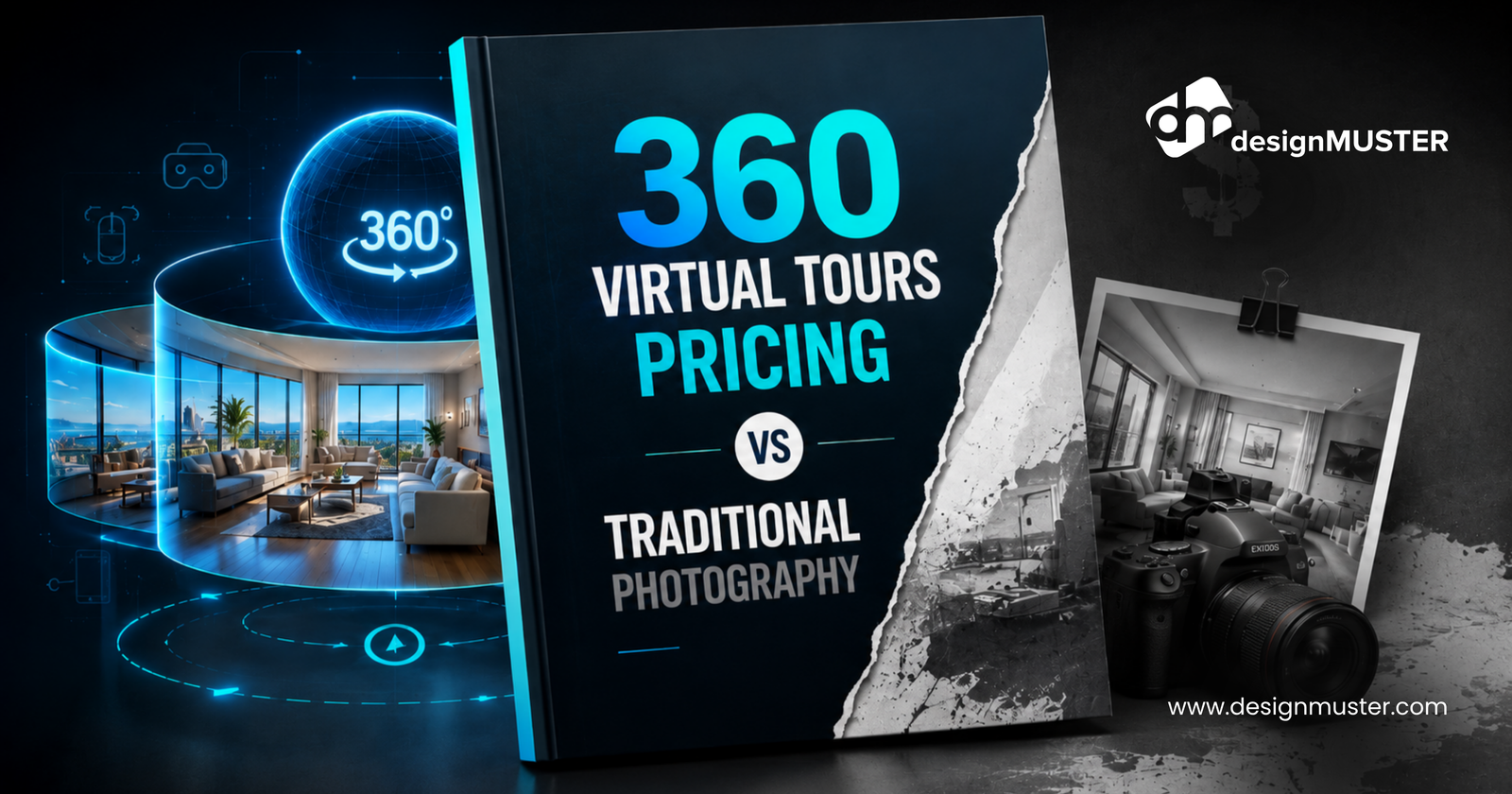

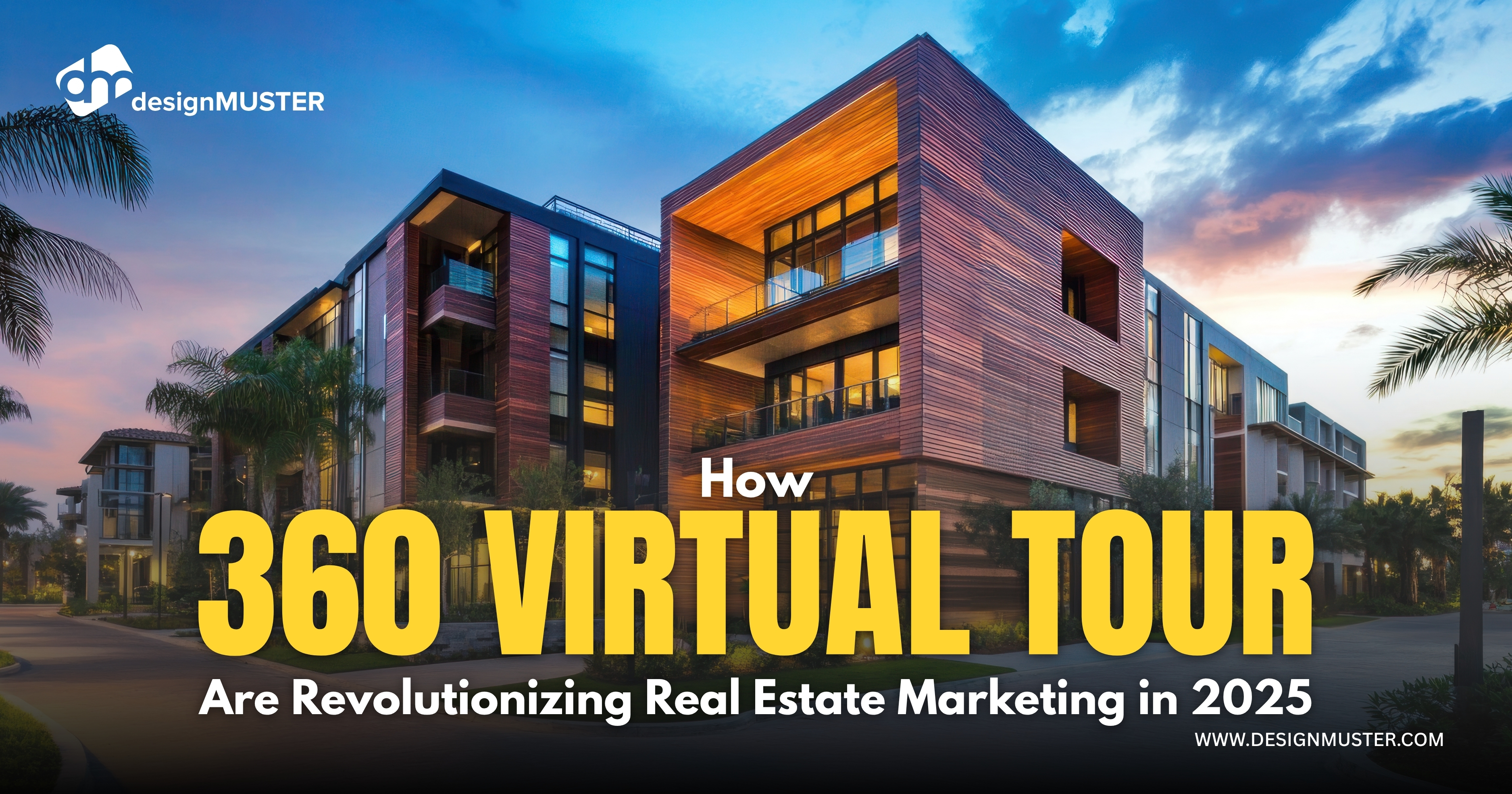
In 2025, the real estate industry is undergoing a digital transformation—and one of the most powerful tools in this evolution is the 360° virtual tour. These immersive experiences allow buyers to explore properties remotely from every angle, breaking down the constraints of geography, time, and physical access. Listings with virtual tours often receive significantly more attention, and agents are discovering that these tours don’t just show a space—they sell it. With the virtual tour market projected to grow at a strong pace (CAGR ~ 29.3 %) and buyers demanding richer content, adopting 360° tours is no longer optional—it’s a competitive necessity.
In this article, we’ll explore why 360° virtual tours are changing real-estate marketing, their key advantages, how to implement them effectively in 2025, and real-world examples that demonstrate their impact.
Why 360° Virtual Tours Matter in Real Estate Today
Changing buyer behaviour
Today’s property buyers expect more than static photos and floor plans—they want to experience space virtually before stepping inside. According to recent data, listings with virtual tours receive up to 87% more views than those without. Moreover, virtual tours keep users on listings 5–10× longer, significantly increasing engagement and the likelihood of conversion.
Expanding reach and accessibility
360° tours open properties to out-of‐town buyers, international investors, and anyone unable to visit in person. They act like a “24/7 open house” accessible from anywhere, reducing geographic barriers and capturing a broader audience.
Credibility, transparency & trust
Providing an immersive, honest view of the property builds buyer confidence. With more viewing done virtually, fewer surprises arise during physical visits, reducing friction in the sales process.
Competitive edge & SEO value
Properties with embedded virtual tours often rank better online because interactive, multimedia-rich content signals quality to search engines. For example, firms report increases in website traffic and visibility when using virtual tours.
Key Advantages of 360° Virtual Tours in Real Estate Marketing
Here are major benefits that make 360° virtual tours a game-changer in 2025:
1. Increased engagement and listing views
As noted, listings with virtual tours generate far more interest than photo-only listings—boosting page views, time on site, and lead volume.
2. Faster decision-making and conversions
When buyers can explore the property in detail virtually, they feel more confident and make quicker decisions. Studies show a reduction in time-to-sale and higher conversion rates.
3. Cost and time savings for agents and buyers
With fewer needless in-person visits, both agents and buyers save time and money. Virtual tours help filter serious leads and reduce non-productive showings.
4. Broader market reach
Virtual tours make properties accessible to remote buyers, expatriates, investors in other cities/countries—expanding the market beyond local.
5. Better presentation of space and layout
Virtual tours give a realistic sense of room size, flow, and spatial relationships—something photos and static plans struggle to convey.
6. Stronger brand image and differentiation
Agents and developers using immersive tours stand out. Innovative marketing helps build a reputation for being modern and client-focused.
7. Boosted SEO and discoverability
Content rich in multimedia (like virtual tours) often performs better in search engines and maps/listings, driving organic traffic.
Related : How Virtual Tours Can Boost Your Small Business’s ROI
How to Implement 360° Virtual Tours Successfully in 2025
Creating a high-impact virtual tour involves more than pointing a camera. Here’s a step-by-step guide for real-estate professionals.
Step 1: Planning & Preparation
- Define your goals: Are you targeting remote buyers, showcasing luxury listings, or reducing showings?
- Map out key areas to capture: Each room, outdoor space, amenities, important features.
- Prepare the property: Stage it properly, ensure good lighting, declutter; virtual tours magnify detail.
- Choose the right equipment or service provider: Consider 360° cameras or professional tour providers.
Step 2: Capture & Creation
- Use high-resolution 360° images or a dedicated 3D scanning platform.
- Ensure consistent lighting and correct exposure across shots.
- For large or high-end properties consider advanced scanning (e.g., LiDAR) for accurate spatial representation.
- Stitch and process images if necessary.
Step 3: Tour Building & Interactivity
- Upload images to your virtual-tour platform.
- Set navigation hotspots so users can move naturally from space to space.
- Add interactive elements: floor plans, labels, embedded videos, call-to-action links.
- Ensure mobile and VR compatibility—most buyers browse on smartphones or via VR headsets.
Step 4: Publish & Promote
- Embed tour on your website, listing portals, and social media.
- Make sure the tour is easy to find (consider QR codes on printed materials).
- Optimize for SEO: use descriptive titles, alt text, and metadata if platform allows.
Step 5: Monitor & Optimize
- Track analytics: how long do users stay? Where do they drop off?
- Adjust hotspots, scene order, and promotional channels as needed.
- Market the tour: use virtual open-house sessions or social media teasers.
Real-World Use Cases in 2025
Here are some scenarios where 360° tours deliver strong results:
Luxury residential listings
High-end properties benefit from immersive tours that highlight unique architecture, finishes, and views. One study found homes with 3D tours sold up to 31% faster and fetched 4-9% higher prices.
Relocation and international buyers
Buyers from abroad or relocating need remote access. Tours give them confidence and a strong feel for the property long before an in-person visit.
Commercial / coworking spaces
Companies or investors can tour office layouts, amenities, and communal zones virtually—streamlining decision making across distances.
Developer pre-sale units
For off-plan or pre-construction properties, 360° tours of model units or show suites help investors and buyers visualize the future space.
Rental & vacation properties
Tourism-adjacent rentals benefit too: showing amenities and surrounding areas can reduce booking friction and improve conversion.
Challenges & Best Practices
While powerful, 360° virtual tours must be done right to deliver value.
- Poor quality equals bad impression: Low-resolution imagery, bad stitching, or inconsistent lighting can damage trust rather than build it.
- Mobile optimization is key: More than 60% of listings are viewed on mobile devices. Retouching Labs+1
- Don’t skip the CTA: A great tour must point to the next step—schedule a showing, request info, contact agent.
- Keep content current: Properties change—update tours when significant changes happen (renovations, furnishings).
- Balance cost and ROI: For smaller listings, a basic tour may suffice. For premium properties, investment in top-tier technology delivers better returns.
Future Trends in 360° Virtual Tours for Real Estate
Looking ahead, several innovations will amplify the impact of virtual tours:
- Integration with AR & VR: Buyers may use VR headsets to “walk through” homes or use AR overlays to visualise renovations.
- AI enhancements: Automated tagging, virtual staging, object removal, and more seamless tour creation.
- Live 360° streaming & virtual open houses: Real-time tours guided by agents allowing remote attendees to ask questions.
- Metaverse property showcases: Properties and developments may appear as virtual spaces for investors and buyers to explore before purchase.
These trends mean that in 2025 and beyond, real-estate professionals who embrace immersive tours will be better positioned to meet buyer expectations and differentiate in the market.
Conclusion
360° virtual tours are no longer a novelty—they’re a fundamental tool for modern real-estate marketing. By offering immersive exploration, extending market reach, building buyer confidence, and driving higher engagement, these tours empower agents and sellers to stand out and close deals faster.
In an era where buyer expectations are rising, those who adopt 360° virtual tours effectively will gain a competitive edge. Whether you’re marketing luxury estates, commercial spaces, or relocation-friendly listings, investing in high-quality virtual tours is an investment in your brand, efficiency, and success. As the real-estate landscape evolves, the properties that are experienced virtually will lead the way.