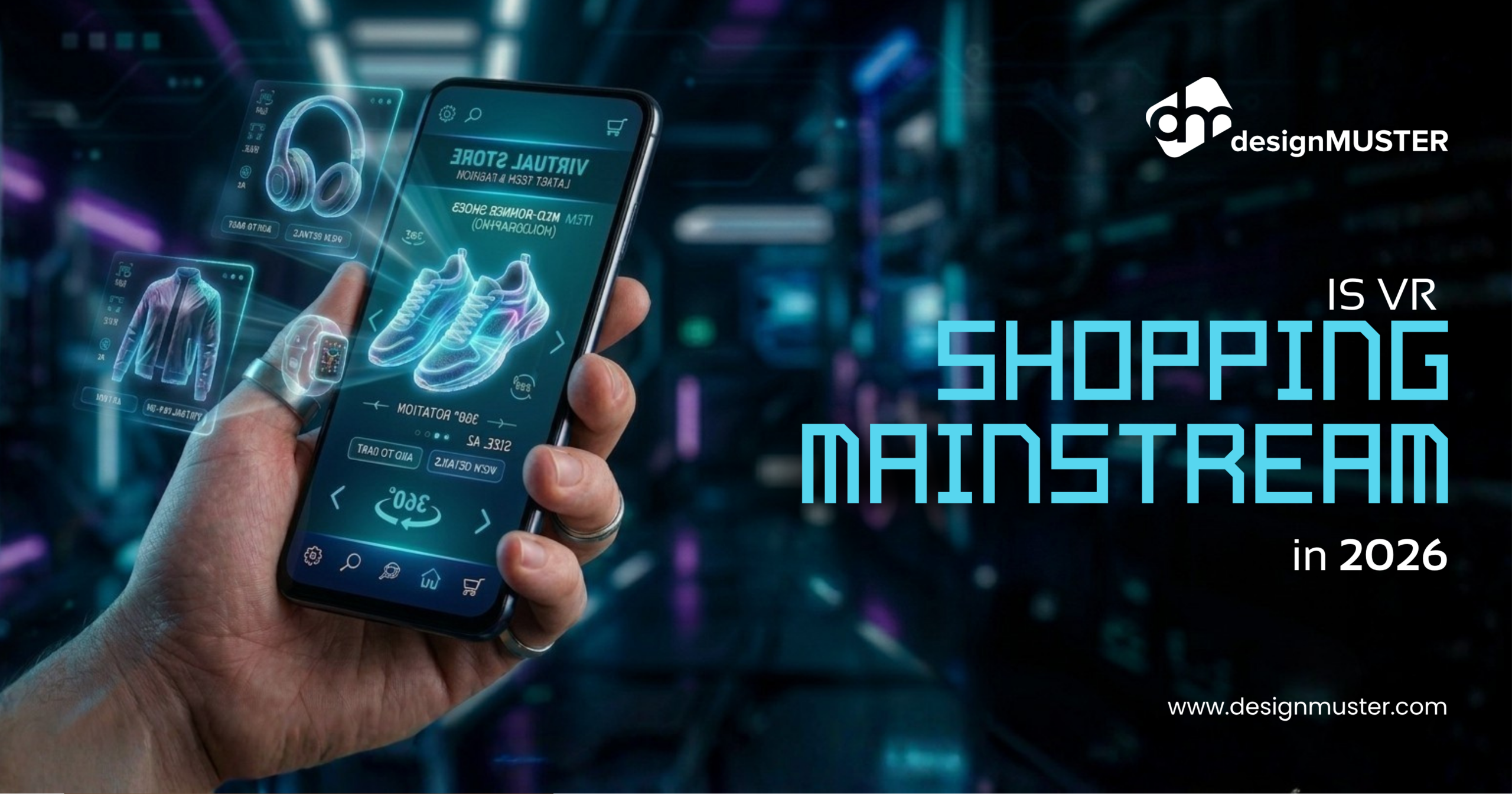


In 2025, businesses face a digital reality where innovation drives survival. Traditional marketing, static websites, and even video content are no longer enough to stand out in a crowded online world. Customers now expect brands to deliver experiences — not just products. That’s where Augmented Reality (AR) steps in.
Once seen as a futuristic concept, AR has now become a practical and essential business tool. It allows brands to merge digital content with the physical world, creating interactive and memorable experiences that capture attention and inspire action. Whether it’s trying on clothes virtually, previewing furniture in your home, or visualizing complex machinery in real time, AR transforms the way people shop, learn, and engage.
As we move deeper into 2025, it’s clear that having an AR strategy isn’t just a competitive advantage — it’s a necessity. In this article, we’ll explore why every business needs one, the benefits it brings, and how to build a winning AR roadmap for the future.
What Is an AR Strategy?
An AR strategy is a structured plan that defines how a business uses augmented reality to achieve its goals. It involves integrating AR into marketing, sales, training, and operations to create better experiences and improve performance.
Unlike random AR experiments or one-off campaigns, a proper strategy aligns technology with your business objectives. It helps you decide:
- Where AR adds the most value (e.g., customer engagement, product demos, training)
- What platforms and tools to use (mobile AR, WebAR, smart glasses)
- How to measure success (conversion rates, dwell time, retention)
Essentially, an AR strategy ensures your investment in augmented reality delivers tangible results — not just flashy visuals.
Why AR Strategy Matters in 2025
1. Consumers Expect Interactive Experiences
Today’s customers want more than static photos or videos. They want to experience a product before they buy it. AR enables them to visualize, interact, and personalize products in real time.
For example, a furniture brand can let customers place 3D models of sofas in their living rooms using AR. Fashion retailers can offer virtual try-ons through mobile apps. These experiences build trust and reduce purchase hesitation — leading to higher conversion rates and fewer returns.
Studies show that shoppers are up to 90% more likely to buy when given an AR preview. As consumer expectations rise, businesses without AR risk being left behind.
2. Boosts Engagement and Brand Loyalty
AR experiences are memorable. They turn ordinary interactions into immersive storytelling opportunities. Customers who engage with AR content tend to spend more time on websites, share their experiences on social media, and remember brands longer.
Whether it’s scanning packaging to unlock 3D animations or exploring virtual product catalogs, AR deepens emotional connections. These experiences transform customers from passive viewers into active participants — increasing engagement and loyalty.
3. Improves Operational Efficiency
AR isn’t just for marketing. It’s also a powerful tool for internal operations. In industries like manufacturing, healthcare, and logistics, AR enhances training, maintenance, and quality control.
For example, AR-based training modules can overlay digital instructions on real-world equipment, helping employees learn faster and with fewer errors. Remote technicians can use AR glasses to receive live visual guidance, reducing downtime and travel costs.
The result? Smarter workflows, lower costs, and improved productivity — all powered by AR.
4. Strengthens Competitive Advantage
By 2025, AR adoption has become a key differentiator between innovators and laggards. Businesses that use AR are perceived as modern, forward-thinking, and customer-centric.
While competitors rely on traditional ads, an AR-enabled business offers immersive experiences that stand out instantly. This perception translates to stronger brand recognition and higher customer trust — crucial advantages in an increasingly digital marketplace.
5. Generates Rich Data and Insights
One hidden advantage of AR is its ability to collect valuable data. Every interaction — from how long a user explores a product to which features they view most — provides insights into customer behavior.
This data can inform marketing campaigns, improve product design, and personalize future experiences. Unlike traditional media, AR delivers both engagement and measurable analytics, helping businesses make smarter decisions.
Key Benefits of Having an AR Strategy
- Higher Sales and Conversions – Customers who can visualize products are more confident in buying.
- Reduced Product Returns – AR helps customers make better decisions, leading to fewer returns.
- Enhanced Brand Image – Using AR positions your brand as innovative and tech-savvy.
- Improved Employee Training – Interactive, hands-on learning is more effective than reading manuals.
- Global Reach – AR can engage audiences anywhere, anytime, without physical limitations.
In short, AR bridges the gap between imagination and reality — giving businesses an edge across every stage of the customer journey.
How to Build an AR Strategy for Your Business
Step 1: Identify Clear Goals
Before jumping into AR, define your objectives.
- Do you want to increase online conversions?
- Improve training efficiency?
- Enhance in-store experiences?
Setting measurable goals (like “increase engagement time by 40%”) helps guide your AR roadmap.
Step 2: Understand Your Audience
Knowing your audience ensures you design AR experiences that meet their expectations. For example, Gen Z shoppers are more likely to use AR filters on social media, while professionals may prefer AR training simulations.
Step 3: Choose the Right Technology
AR can be deployed in different ways:
- Mobile AR – Through apps like Snapchat or your brand’s own application.
- WebAR – Accessible via browsers, requiring no app downloads.
- Head-Mounted AR – Through smart glasses for fieldwork or training.
Select the platform that fits your audience and business goals.
Step 4: Create Compelling AR Content
AR should be interactive, simple, and visually appealing. Avoid adding AR just for the sake of technology — make sure it solves a problem or enhances an experience.
- Use 3D product models that load quickly.
- Keep instructions intuitive.
- Incorporate storytelling to make the experience memorable.
Step 5: Integrate and Promote
Your AR initiative should connect with your existing marketing and sales channels. Include AR previews on product pages, use QR codes in stores, and share AR experiences on social media. Educate your audience about how to use it.
Step 6: Measure, Improve, and Scale
Use analytics to monitor performance — engagement duration, clicks, conversions, and feedback. Refine your AR experiences based on data, and gradually expand to other products or departments once you see success.
AR in Action: Real-World Example
Retail
From virtual fitting rooms to interactive catalogs, retail is leading the AR revolution. Customers can visualize outfits, preview furniture, or even see how makeup shades look on their skin — all before purchase.
Real Estate
AR and 3D virtual tours help buyers explore properties remotely, saving time and simplifying decision-making. Realtors using AR tools have reported faster sales and better client satisfaction.
Manufacturing and Maintenance
Technicians equipped with AR glasses can access visual instructions or real-time data overlays, reducing training time and human errors.
Education and Corporate Training
AR brings complex concepts to life — from virtual science labs to simulated corporate training programs — increasing engagement and retention.
Marketing and Advertising
Brands use AR for interactive packaging, gamified campaigns, and virtual product launches that encourage sharing and boost brand exposure.
Future of AR in Business
The future of AR in 2025 and beyond looks even more exciting:
- WebAR Expansion: As browsers become more advanced, users will experience AR directly on websites without downloading apps.
- AI Integration: Artificial Intelligence will personalize AR interactions based on user preferences.
- AR Glasses and Wearables: Devices like smart glasses will make AR experiences more seamless and accessible.
- Sustainability: Businesses can reduce waste by using AR prototypes instead of physical samples.
- Metaverse Connection: AR will merge with virtual environments, bridging real and digital spaces for hybrid experiences.
Businesses that start building AR strategies now will be well-positioned to dominate this new era of immersive engagement.
Conclusion
In 2025, having an AR strategy is no longer a futuristic idea — it’s a business necessity. Augmented reality is transforming how companies attract, engage, and retain customers, while also improving internal operations and efficiency.
With benefits like higher sales, reduced costs, improved training, and stronger brand loyalty, AR is quickly becoming one of the most powerful tools in digital transformation. The businesses that adapt today will shape the customer experiences of tomorrow.
Whether you’re a retailer, manufacturer, educator, or marketer, integrating AR into your strategy ensures your brand stays relevant, innovative, and ahead of the curve.