
In 2026, consumers are exposed to thousands of advertisements, social media posts, videos, and branded messages every single day. As digital competition continues growing, capturing customer attention is no longer the biggest challenge for brands — staying memorable is. Businesses today are not only competing for clicks and impressions but also for long-term customer recall and emotional connection. This is where augmented reality (AR) is becoming one of the most powerful marketing technologies for modern brands.
Augmented reality transforms passive marketing into immersive experiences by allowing customers to interact with products and digital content in real-world environments. Instead of simply viewing advertisements, users can virtually try products, explore branded experiences, and engage with interactive storytelling. These experiences create stronger emotional engagement and significantly improve brand memory. In 2026, brands using AR are seeing higher engagement, stronger customer interaction, and improved recall because immersive experiences naturally leave lasting impressions compared to traditional advertising methods.
What Is Augmented Reality in Marketing?
Augmented reality in marketing refers to the use of digital elements such as 3D objects, animations, filters, or interactive experiences layered onto the real world through smartphones, tablets, or wearable devices. AR allows consumers to interact with products and brand experiences in a more immersive and personalized way.
In 2026, AR marketing is widely used across eCommerce platforms, social media campaigns, retail experiences, mobile apps, and digital advertisements. Brands are using augmented reality to create virtual try-ons, product previews, interactive packaging, virtual showrooms, and gamified customer experiences that improve engagement and memorability.
Why Customer Recall Matters for Brands
Customer recall plays a major role in purchasing decisions and long-term brand success. When consumers remember a brand clearly, they are more likely to trust it, engage with it again, and choose it over competitors during future purchases.
In crowded digital markets, traditional advertisements are often forgotten quickly because users passively consume them while scrolling through content. Interactive experiences, however, activate stronger emotional and cognitive responses. This is why immersive technologies such as augmented reality are becoming essential tools for improving brand memorability in 2026.
Strong customer recall also contributes to:
- Higher repeat purchases
- Better customer loyalty
- Increased word-of-mouth marketing
- Stronger emotional brand connection
- Improved long-term customer retention
AR Creates Immersive and Memorable Experiences
One of the biggest reasons AR improves customer recall is because it transforms customers from passive viewers into active participants. Instead of simply looking at an advertisement, users interact with products and branded experiences in real time.
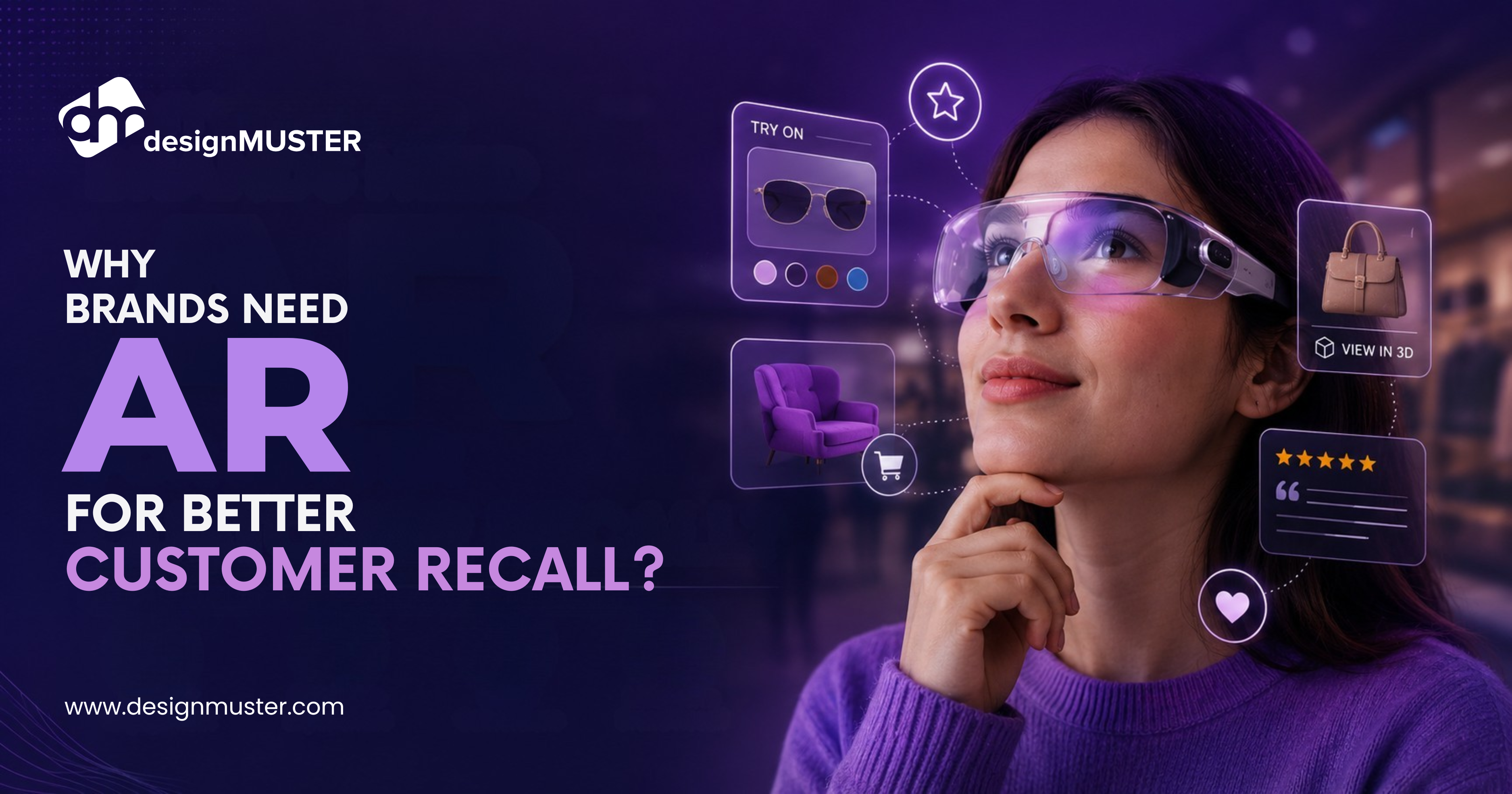
For example, customers can virtually place furniture inside their homes, try on sunglasses using their phone camera, or explore animated packaging experiences through AR technology. These interactions create memorable moments because users become emotionally and physically involved in the experience.
In 2026, immersive experiences are far more effective at creating lasting impressions than static marketing campaigns because they engage multiple senses and encourage active participation.
Emotional Engagement Improves Brand Memory
Emotion plays a major role in memory retention. Consumers are more likely to remember experiences that feel entertaining, useful, exciting, or emotionally engaging. Augmented reality helps brands create these emotional moments through interactive storytelling and personalized experiences.
AR experiences often create feelings of curiosity, enjoyment, and surprise, which strengthens the emotional connection between consumers and brands. Whether it is a virtual product try-on, an interactive social media filter, or an immersive retail experience, AR makes brand interactions feel more personal and engaging.
In 2026, brands are increasingly using emotional engagement as a strategy for improving customer recall because emotionally connected customers are more likely to remember and trust brands over time.
AR Increases Customer Interaction Time
The longer customers interact with a brand, the more likely they are to remember it. Traditional advertisements often capture attention for only a few seconds, while augmented reality experiences encourage users to spend significantly more time engaging with branded content.
Interactive AR campaigns invite consumers to explore products, test features, customize items, and share experiences socially. This extended interaction increases exposure to brand messaging and strengthens memory retention.
In digital marketing, increased engagement time also contributes to stronger customer relationships and improved campaign performance, making AR a valuable tool for both branding and conversion optimization.
Social Media AR Experiences Boost Brand Visibility
Social media platforms in 2026 heavily support augmented reality experiences because interactive content drives higher engagement. Brands are increasingly using AR filters, branded effects, and interactive experiences across platforms such as Instagram, TikTok, Snapchat, and Facebook.
These AR experiences encourage users to create and share content with friends and followers, expanding brand reach organically. When customers actively participate in branded AR experiences, they become part of the marketing process itself.
This user-generated interaction significantly improves customer recall because consumers associate the experience directly with the brand. Shared AR experiences also create stronger social engagement and improve brand recognition across digital communities.
Personalized Experiences Strengthen Customer Recall
Personalization is one of the most important marketing trends in 2026, and AR helps brands deliver highly personalized experiences that customers remember more easily. Augmented reality allows users to interact with products in ways tailored to their preferences, environments, or needs.
For example, customers can customize product colors, preview furniture in their own homes, or virtually try products based on personal style choices. These personalized interactions create stronger emotional investment because consumers feel directly connected to the experience.
Brands that deliver personalized AR experiences often achieve higher customer satisfaction and stronger brand loyalty because consumers increasingly value experiences that feel relevant and customized to them.
AR Helps Build Trust and Product Confidence
Customer recall is not only about entertainment — it is also about trust. Consumers are more likely to remember brands that help them feel confident during the purchasing process. AR improves product understanding by allowing shoppers to visualize products more accurately before buying.
Virtual try-ons, “View in Your Space” tools, and interactive product previews reduce uncertainty and help customers make informed decisions. When customers have positive and confident shopping experiences, they are more likely to remember the brand favorably in the future.
In 2026, trust-based customer experiences are becoming essential for building long-term relationships and improving customer retention in competitive markets.
AR Enhances In-Store and Retail Experiences
Retail brands are increasingly integrating AR into physical shopping environments to create more engaging in-store experiences. Interactive mirrors, virtual product displays, and mobile AR experiences help bridge the gap between digital and physical retail.
These technologies make shopping more interactive and entertaining while improving product discovery and customer engagement. In-store AR experiences also encourage customers to spend more time interacting with products and branded environments.
As experiential retail continues growing in 2026, AR is becoming an important tool for helping brands create memorable shopping experiences that improve customer recall long after the visit ends.
How Can 3D Product Models Increase Online Sales
AR Supports Better Storytelling and Brand Identity
Storytelling remains one of the most effective marketing strategies for creating emotional connection and improving brand memory. Augmented reality allows brands to tell stories in immersive and interactive ways that traditional content cannot achieve.
Through AR experiences, brands can guide customers through product journeys, showcase brand values, explain product functionality, or create gamified experiences that entertain users while delivering marketing messages.
Interactive storytelling strengthens brand identity because consumers experience the message directly instead of simply reading or watching it passively. In 2026, immersive storytelling is becoming a key factor in successful digital marketing campaigns.
Industries Benefiting from AR Marketing
Many industries are already using AR to improve customer recall and engagement. Fashion brands use virtual try-ons to help customers test products digitally before purchasing. Furniture companies allow shoppers to place products in their homes using smartphone cameras.
Beauty brands use AR makeup filters for personalized product testing, while automotive companies create immersive configurators that let users customize vehicles interactively. Even food, entertainment, healthcare, and education industries are using AR experiences to strengthen customer interaction and improve memorability.
As AR technology becomes more accessible and affordable, its adoption is expanding rapidly across industries in 2026.
Challenges Brands Face with AR Implementation
Although augmented reality offers many benefits, businesses still face challenges when implementing AR marketing strategies. Developing high-quality AR experiences requires investment in 3D modeling, app development, optimization, and user experience design.
Some businesses also struggle with compatibility issues across devices and platforms. Poorly optimized AR experiences can negatively impact performance and user satisfaction.
However, advancements in cloud rendering, AI-powered asset creation, and WebAR technologies are making AR implementation easier and more scalable in 2026. Many businesses now use browser-based AR solutions that reduce technical barriers and improve accessibility for consumers.
Related: Barriers to VR Shopping Adoption in 2026
Future of AR in Customer Engagement
The future of augmented reality in marketing is closely connected to artificial intelligence, wearable devices, immersive commerce, and personalized digital experiences. As AR glasses and spatial computing technologies continue advancing, brands will create even more immersive customer experiences.
In the coming years, AR is expected to become a standard component of digital marketing, retail, social commerce, and customer engagement strategies. Consumers will increasingly expect brands to provide interactive experiences that blend digital and physical environments seamlessly.
Businesses that invest in AR technology today are positioning themselves ahead of future consumer expectations while building stronger emotional connections and brand recall.
Conclusion
In 2026, augmented reality is becoming one of the most effective technologies for improving customer recall and strengthening brand engagement. Traditional advertising methods often struggle to leave lasting impressions in crowded digital spaces, while immersive AR experiences create memorable interactions that consumers actively participate in and emotionally connect with. By transforming passive marketing into interactive storytelling, AR helps brands remain more recognizable and impactful in the minds of customers.
From virtual try-ons and interactive social media filters to immersive retail experiences and personalized product previews, AR allows businesses to create deeper customer engagement and stronger emotional relationships. These experiences not only improve brand memory but also increase trust, loyalty, and long-term customer retention. As immersive digital experiences continue shaping the future of marketing, brands that embrace augmented reality today will be better positioned to stand out, remain memorable, and succeed in the evolving digital marketplace of 2026.